A Guide to Japanese Denim
A guide to understanding the fabric, fits, and fades we love.
Japanese denim has become the benchmark for craftsmanship and quality. Made slowly, thoughtfully, and with an obsession for detail — it’s the opposite of fast fashion.
Whether you’re buying your first pair or exploring deeper into the world of selvedge, this guide explains what makes Japanese denim so special and how to care for it.
What is Japanese Denim?
Japanese denim is built on patience, precision, and passion.
In the 1970s, a small group of makers began studying vintage American jeans — not to copy them, but to master and refine the old ways of weaving and dyeing. Using Toyoda shuttle looms, built in Japan decades earlier, they recreated the dense texture and deep indigo tones of early denim.
Out of this devotion came the now legendary Osaka Five — Studio D’Artisan, Denime, Evisu, Fullcount, and Warehouse — followed by brands like Samurai Jeans and Momotaro, who pushed things even further.
Their focus was never on speed, but on soul: denim with life, depth, and character.
Why Japanese Denim?
Because it’s denim made with intent.
Every thread, every fade, every stitch reflects the maker’s eye for detail. Production is slow and small-scale, using high-quality cotton and traditional techniques.
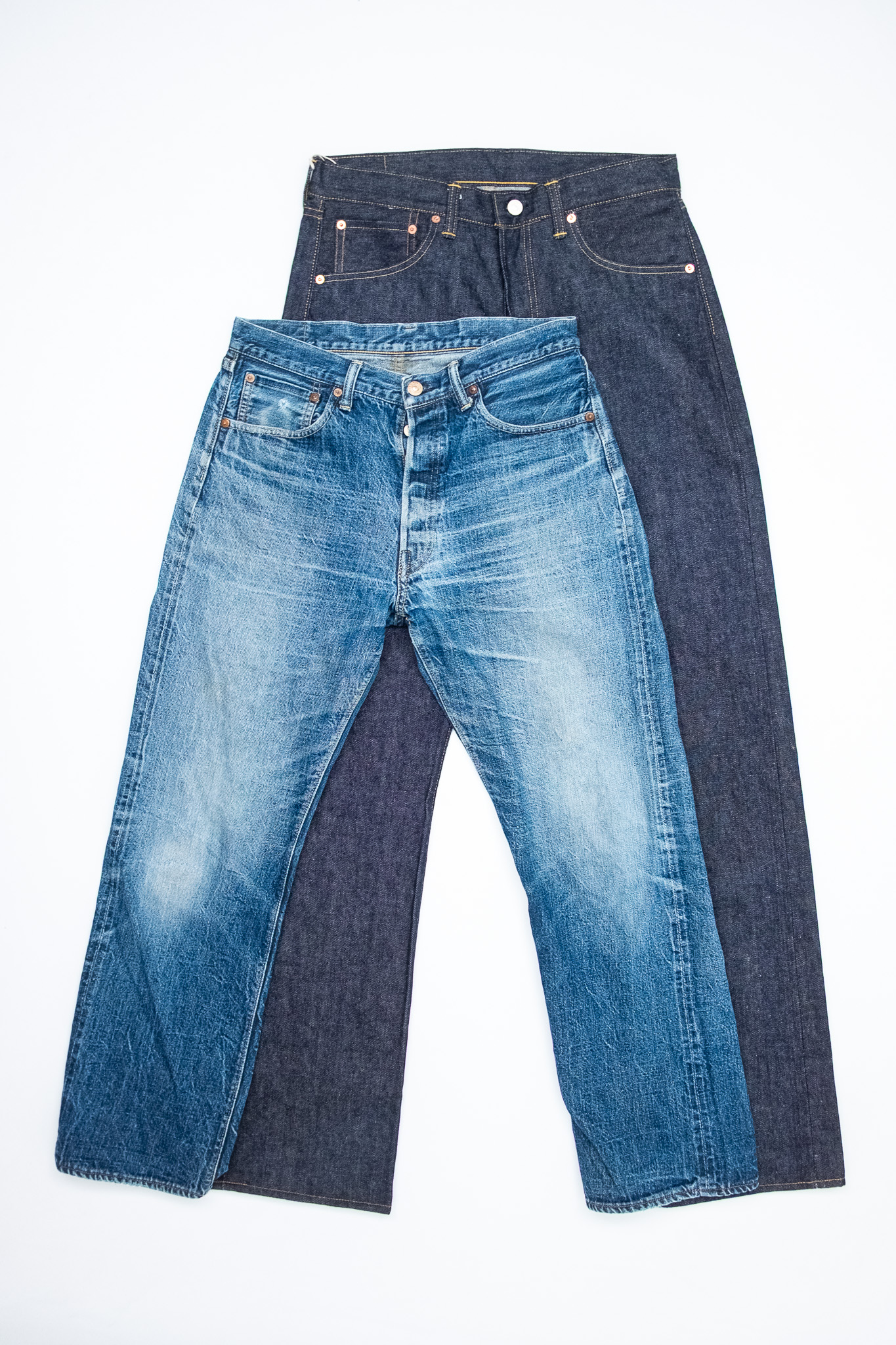
The result is jeans that wear in — not out — telling your story through every crease and shade of blue.
What is Selvedge?
Selvedge (short for “self-edge”) is the tightly woven edge of the fabric that prevents fraying. It’s made on old shuttle looms, producing narrow rolls of denim with clean, finished edges.
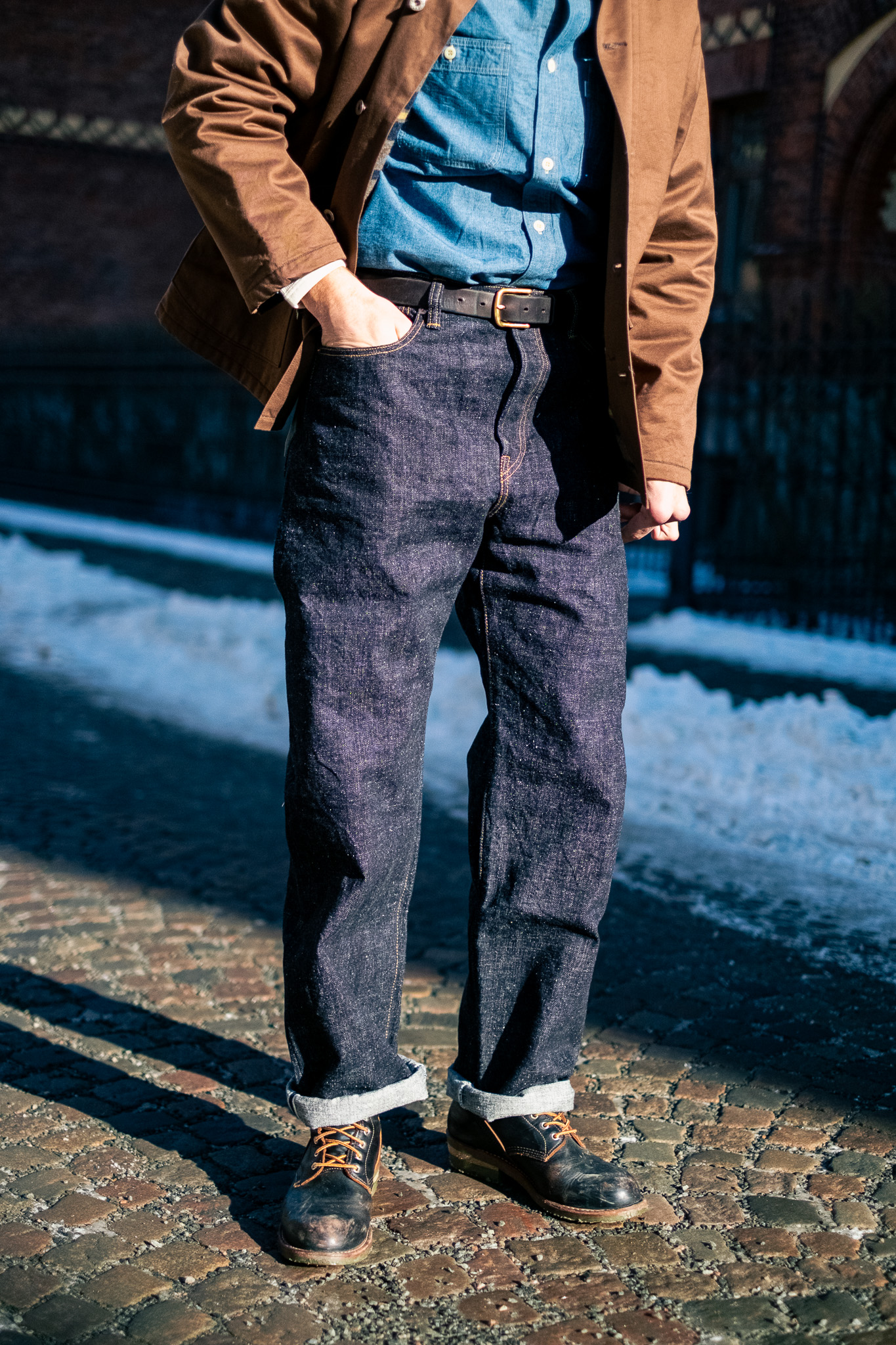
When you cuff your jeans, you’ll often spot a coloured line running along the inside seam — a hallmark of selvedge production and the mill that wove it.
Selvedge denim is denser, more durable, and develops a personal patina over time.
Shrink-to-Fit, Raw, One Wash
Shrink-to-Fit (Unsanforized):
The most traditional type of denim. It hasn’t been mechanically shrunk, so expect it to shrink roughly one full size in the waist and 6–10 cm in the length after the first soak or wash. Once worn in, it stretches slightly to your body.
Raw / Dry (Sanforized):
Mechanically pre-shrunk to remove most shrinkage (around 1–3%). Still unwashed and crisp, ready to mould to you over time without major size changes.
One Wash:
Washed once at the factory to remove remaining shrinkage. Softer and easier to size right from the start — ideal for beginners.
What Does Oz / Ounce Mean?
Denim weight is measured in ounces per square yard of fabric. It affects how your jeans feel, fade, and age.
Lightweight (10–12 oz): Soft and breathable — perfect for warmer months.
Midweight (13–15 oz): The most versatile range, suitable year-round.
Heavyweight (16 oz+): Stiff at first, but fades dramatically and lasts a lifetime.
Higher ounce denim doesn’t mean better — just different. It’s all about the experience you want from your jeans.
Terms Regarding Fit
Straight: Classic and balanced through the leg.
Slim: Slightly trimmer, clean silhouette.
Tapered: More room in the thigh, narrowing from the knee down.
Loose/Wide: Relaxed and vintage-inspired, with a natural drape.
Rise: How high the jeans sit on your waist.
How Do I Find My Size?
Each brand and fabric behaves a little differently — and most Japanese brands tend to run small in size compared to Western ones.
The best way to find your fit is to compare our detailed measurements with a pair of jeans you already own before ordering.
How Do I Take Care of My Jeans?
Wash sparingly. Turn them inside out, use cold water, and avoid the tumble dryer. Let them air dry naturally.
We believe in repair over replace — that’s part of your jeans’ story.